Showing posts with label The sports page. Show all posts

18 Mar 2014

6 nations rugby 2014, what conclusions?

The top European nation's rugby tournament of 2014, known as the 6 Nations Tournament, has just finished, with the final three games being played last Saturday (and I watched all three). With the Rugby World Cup coming up in the autumn of 2015, this is a good opportunity to look at the results and assess the current strengths and weaknesses of the top European rugby nations, whilst keeping an eye on the southern hemisphere nations that played test matches in Europe in November 2013 and which will play their own 4-nations tournament later this year. Even though each edition of the Rugby World Cup has had its share of surprises and upsets, the top teams have rarely failed totally, so, with some variations within the upper hiearchy, those teams that show well in the two major international tournaments that take place within 18 months of a world cup usually do well in the following edition of the most prestigious rugby event.


Brian O'Driscoll, the brilliant Irish centre back, after a record 150 international games, retired from international rugby at this weekend's game in which his team narrowly defeated France. Hats off!

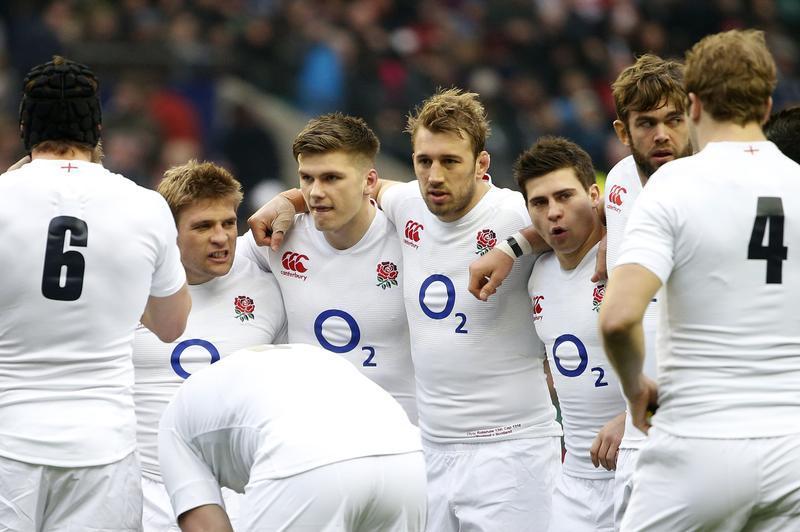
Ireland was the deserving winner of this 2014 European tournament, just a nose ahead of England. And this tournament victory provided a suitable send-off for their great centre back Brian O'Driscill, whose last internationla game this was. The only game that Ireland lost was a very tough game (in my opinion the best game of the whole tournament) that they lost by 3 points to England, but which was played on the English home ground of Twickenham, giving the home team an indisputed advantage in such a close game. Both these teams finished with 4 victories out of the 5 games played by each, but the Irish finished with a slightly better points balance (goal average if you prefer) than the English: 83 against 73. But I thought the Irish also deserved their overall tournament victory on account of the consistency of their play and their team discipline. Their only loss was in London, by just three points and that game could have gone to either team. Almost the same could be said of England, who also lost just one game, to France and in Paris, and then only by two points. But they were more frequently penalised overall than the Irish and their game, although it looked perhaps more adventurous, was also less well-oiled and solid that that of the Irish. But England are a younger team with quite a few new players on the side, so this may not be a handicap in the perspective of 2015.


The French scrum, once a source of pride, has not looked so good in this tournament and was reguarly dominated by its opponents, and penalised by the referees (here Steve Walsh in the game against Ireland). Combined with bad line-outs, this deprived the French backs of decent balls a lot of the time

Of the other teams, Wales, the reigning champions (they have won the last 2 editions of this tournament) played brilliantly on occasions, but more erratically than the top two teams. France was on the whole very disapponting, with the exception of 30 minutes of their game against England (which they manged to win) and their very good display against Ireland. They were lucky to win in Scotland, were not that impressive at home against Italy, the weakest side, and got well trounced by Wales in Cardiff. They finished in 4th place, which is about right for their current level. Italy and Scotland were clearly in another, lower league and took the last 2 places, with Italy trailing and losing all its games.


Dany Care, the English scrum half, one of the best players in this tournament and a key element in England's good overall performance 

Before coming back to some other comments on the way these 6 teams played during this tournament and what this could signify for the future, particularly in the light of the World Cup next year, let's take a look at the latest world rankings, which are regularly established by the International Rugby Board on the basis of statistics drawn from international games. The top three teams are still from the Southern Hemisphere, with, in that order, New Zealand, South Africa, and Australia. England is now a close fourth and could have taken third place had it won this 6 nations tournament. Ireland has moved up to fifth place, followed by Wales and France. So, at least according to the statistics, the world heirachy has been slightly shuffled in a minor key, but not exactly overthrown: the major Southern Hemishere nations still appear to be on top of the world or rugby, even if not all of them were present in the final stages of the last edition of the World Cup.


Luther Burrell, an impressive new player in the English back line who made his mark by scoring tries, breaking through regularly and defending well. Even with Manu Tuilagi absent for all but 20 minutes of the whole tournament, the English backs looked fast and were creative.


But here we should perhaps remember the words of Mark Twain (who attributed them to Benjamin Disraeli): "there are three kinds of lies; lies, damned lies, and statistics" The inference clearly being that the third of these categories is the worst. In any event, statistics are unable to reveal the tendencies as shown in recent games of international rugby. During the November test matches, both England and Ireland came very close to defeating the apparently invincible All Blacks, who had been beaten a year before by England. South Africa, although undoubtedly powerful and redoutable in a single game, looked solid but uncreative. Australia were clearly a notch below and could be regularly beaten by any of the top European nations. So the North/South gap could be closing, as the Irish played very well and the English, with a younger team that has finally found cohesion and resilience, looked more creative and dangerous than they have for a very long time. They must however sort out their discipline, as they give away too many penalties to win close matches against tighter teams.  

The next chapter, albeit in a minor key as this will be the end of  a long and tiring season for most top European players, will be written when the summer tours of Northern Hemisphere nations to the Southern Hemisphere take place in June. England will tour New Zealand, France go to Australia, Wales to South Africa and Ireland to Argentina.


8 Jul 2013

International rugby : the lion roars, finally

The British (and Irish) Lions Rugby Union tour of a southern hemisphere country takes place every 4 years and constitutes the only occasion for the four nations that make up the British Isles (England, Wales, Scotland and Ireland) to play rugby together against a common opponent. Usually they are opposed to one another, and annually so in the (now) 6 nations tournament, which has seen the successive addditions to the elite European rugby-playing nations' club of France (1910 to 1931 and then again after the second world war) and finally of Italy in 2000, since the British Isles countries first started playing rugby against each other in 1882.


It is perhaps one of rugby's most striking and endearing features that enemies on the field of what is, after all, a fairly violent combat sport, can become friends off the field, and even join forces to defeat a common opponent. The Lions is the name given to this shared team that only exists every 4 years, and so is necessarily short of the shared reflexes and experience that is one of the ingredients of a successful rugby team. We should remember that, however much individual brilliance is necessary and admirable on  a rugby field, it is above all a very collective sport, in which discipline, solidarity and anticipation of what another player is about to do are all-important.


The 2013 Lions team have just defeated Australia, in Australia and in a three match series, narrowly winning their first test match 23-21, narrowly losing the second one 15-16, and comprehensively winning the third and decisive game, played in Sydney on July 6th in front of a crowd of some 83,000 spectators, by a resounding 41-16. As many commentators have underlined, this is the first Lions series victory since the team of that time, under the captaincy of Martin Johnson, defeated South Africa (2 games to 1) in 1997.

Mike Philips, the Welsh scrum-half, congratulates Alex Corbisiero, the English prop forward, on the latter's try in the opening minutes of the 3rd test. So the Welsh don't always deem the English to be their worst enemies after all!

So what are, or have been in this instance, the key factors in making this tour a sporting success for the Lions? One has to start with the cohesion somehow found between the top players who, for the most part, had little or no experience of playing together before this tour and its fairly short period of preparation. Which preparation was truncated even further by a cascade of injuries to key playrs during the intital phases, and causing changes in captaincies as well as in key positions. But in fact this handicap factor was intelligently reduced by the head coach, the New-Zealander Warren Gatland, by his selection of a majority of Welsh players (10 out of 15 for the opening team in the final game) in his squad. Why so many Welsh players ? Two reasons: one, the Welsh have regularly been the best European team over the past few years, and, two, Gatland has been their coach so they know each other well. Naturally this has annoyed commentators from the other three countries involved, but it has to be said that he has proved his point by the results, and particularly the very convincing domination handed out by the Lions team in the 3rd game.


Warren Gatland (foreground), the British Lions coach is congratulated by Robbie Deans, the coach of the Australian team, after the last game in the series.  It should be noted that both coaches are from New Zealand, rugby's undisputed top nation. Also that Robbie Deans has already been fired by the Australian rugby board, paying the price for this defeat.


Amongst the handicaps that were overcome by this mixed team has been a string of injuries to key players. Paul O'connell, the Irish lock forward in the first test, Warburton the Welsh flanker and captain in the second test, and so on. Jamie Roberts, the powerhouse Welsh centre back who missed the first 2 tests, and so on. And the coach added his own share of controversial surprises, particularly that of dropping Brian O'Driscoll, the Irish star player, for the third and decisive game, preferring the Welsh pair of Davies and Roberts in the centre slots of the backs. 

The two Welsh captains, Sam Warburton (left) and Alun Wynn Jones, with the trophy after Saturday's game


Other explanatory factors? Well the old adage that says "no scrum no win" was totally validated in this third test match. The Wallabies were comprehensively dominated in this key sector of the game, the French referee awarding penalty after penalty to the Lions on account of the Australians' repeated failures to resist in the scrums. And at least one of the 4 tries scored by the British team resulted directly from a scrum. Given that southern hemisphere nations tend to place less emphasis on this aspect of the game, and hence their referees to be less attentive to the rules that govern it, one could imagine that the first two tests, which were refereed by men from New Zealand and South Africa, could have had a somewhat different configuration had they been refereed by the Frenchman, Romain Poite, but of course that is pure speculation. So my choice for the star players could well be shared by all the Lions' scrum members.

One picture cannot tell the tale of an 80 minute-long battle, but this collapsed scrum is a symbol of the Wallabies' defeat in the third test.

In a collective game such as rugby, I am always reticent to single out individual players, but several stood out, for their spectacular and decisive actions at key moments in the games, or for their regularity in their respective positions and roles. And my man of the series would have to be the diminutive (it is untrue to say that all rugby players are now giants) Welsh full-back, Leigh Halfpenny. With his extremely precise goal kicking from all parts of the field (I believe that he finished the tour with a success rate in the region of 90%), he scored 49 points in the three tests and 21 alone in the final one. One could add "no kick, no win" to the scrum adage. The Australians lost the first test essentially because their best goal kicker was injured in the opening minutes of the game, and one of the reasons for their narrow victory in the second game was his return. But Halfpenny was also decisive in his field play, making two of the Lions's tries in the third test. He proved his worth equally by good positioning, defeating opponents ball in hand, and making the right pass at the right moment. 


Lions' full-back Leigh Halfpenny kicks for goal, with impressive statistics of a 90% success rate on the tour


For Australia, the revelation of the series has to be the very tall, strong and surprisingly  nimble winger, Israel Folau, who went over twice in the first test (see first photo below). He was regularly impressive ball in hand, despite the moment when his vis-à-vis, the equally huge Welsh winger, George North, picked the big man up and carried him a few yards on his shoulder following a tackle (second photo below). 


Given that North also scored key tries (1st and 3rd tests), he also figures as one of the "stars" of the Lions team, regularly focusing much attention on the part of defenders and hence creating gaps for his colleagues, even when he himself was unable to break through the usually hermetic Australian defense.


North scoring his try in the first test. He flew over with another one that was rightly  not allowed for a foot in touch just before


 Daniel Craig with the Irish fly-half Jonathan Sexton after the final victory. So James Bond did it again? And where was Moneypenny?

What else? Well, apart from some excellent rugby and two very tense games that could have gone either way, we saw movie stars enjoing the final game and an amazing 30 to 40 thousand Lions supporters making the long trip down under at huge cost to themselves and making the whole thing look like a giant party (which it surely wasn't on the field!)


It can  look likewarfare on the field, but rugby fans, unlike many of their soccer counterparts, have a good time together (and long may this spirit reign!). The beer bills must have been remarkable too. 


9 Jun 2013

When the underdog wins: the final of the French rugby championship

Many of us tend to like it when the underdog in any form of contest wins whatever the struggle, fight, or competition may be. Call it the David vs Goliath complex, or the small is beautiful syndrome, or the (back to school here) beat the big bully story re-told.

There was one more example of this just over a week ago when, in the final of the French rugby union season (XV-a-side) Castres Olympique beat the Rugby Club of Toulon quite convincingly, despite the apparently close score of 19-14 (finals are usually close).

The Castres team celebrate their 19-14 victory over the Toulon all-stars

It should be said the Toulon had just, 2 weeks previously, won the European Cup (known as the Heineken Cup on account of its main sponsor), beating the favourites, another French team called Clermont. But Toulon were clear favourites for this French cahmapionship final, having defeated the title holders, Toulouse, in one semi-final, and despite the fact that Castres had beaten (to most people's surprise) Clermont in the other semi-final.

Rory Kockott, the South-African scrum half for Castres, who is hardly a world name but who is a key player in their game, scores the try that turned the match.  

Rugby Union is now a fully professional sport and, in France, all top teams recruit a growing proportion of their players (and even their trainers) from all over the rugby-playing world. This requires money, and the more you have, the more you are able to recruit star players from wherever, and this tend to draw more spectators into the stadoums where you play. Toulon is a prime example of this pattern, with stars, albeit somwhat ageing, like Jonny Wilkinson (England) Bakkies Botha (South Africa), Matt Giteau (Australia) or Chris Masoe and Carl Hayman (New Zealand). But Castres, although it has some players recruited from outside France, has no international stars in its line-up and been trained for a number of years by a little-known (but well respected in rugby circles) French tandem, Laurent Labit and Laurent Travers. One of the main reasons for this is the relative modesty of the town of Castres (in the Tarn departement of South-West France), and hence its budget. Even with a big pharmaceutical company (Pierre Fabre) as its main and historical sponsor, the Castres Olympique's annual budget comes in at under 16 million euros per annum, placing it in 9th place in the top budgets for French professional rugby clubs and looking tiny alongside that of Toulouse, which stands at 35 million.

So the underdog won. So what? Well, for a start, it showed that monay cannot buy everything, even in modern sport. It also rewarded several years of consistent hard work and good results from this club who has regularly finished in the top 4 or 6 teams of the 14-team championship recently. Yet they hadn't won this competition since 1993. What goes around comes around, and all I can now hope for is that the club I support, Stade Français Paris, whose performance over recent years has been, shall we say, disappointing (only 10th place in the French championship this year, but a finalist in the second European cup) will do much better next year with its budget that places it amongst the top 4 or 5 spenders.


25 Feb 2013

6 nations rugby, round 3


England vs France is always the scene of some folklore

The big match of the weekend was of course the France vs England game (aka "the Crunch"), played this year at Twickenham. I had bet on a close voctory for England, and the game should probably have had a closer end score than it actually turned out (23-13). With France having its back to the wall after successive defeats against Italy and Wales in the first two games of the series, despite being one of the favourites for this year's tournament, they were likely to be dangerous in this game and they did in fact pose serious problems to England's defense during the first half, scoring a brilliant try through Wesley Fofana and finishing just ahead at half-time (10-9).


France's Wesley Fofana goes over for his try, the most spectacular action of this game, after a 60 metre run and five avoided tackles. You can see some helpless English defenders on the floor in the background.


But the French team then tired in this very physical game after 60 minutes, and lacked both discipline and clairvoyance at crucial moments. The only English try was a lucky one, scored by Manu Tuilagi, who had always looked dangerous, making several breakthoroughs bofore this effort that more or less sealed the fate of the game.


Tuilagi scores England's only try, after a ball flies out of a ruck into his hands

"There will be blood" could have been the title of the scenario for this game, and Owen Farrell in particular appeared to lose his cool rather unnecessarily at times, although he was clearly tripped when going for a loose ball at one point: a foul that went unnoticed by the refereee and would have cost France a yellow card.


Overall England deserved their victory by their discipline and their constant attempts to vary their play and keep this in the adversary's half, but this was far from an easy victory and France can be proud of their performance. England now look very likely to win this tournament, and only Wales can seriously prevent them from winning all their games and so getting their first grand slam for 10 years.


Keith Earls looked dangerous for Ireland but was held by good collective defense by the Scots

The other games held lesser interest. I watched Scotland courageously defeating Ireland 12-8 in a tight game. Ireland badly missed their fly-half Sexton in this game. Ireland's 2 consecutive losses (against England and Scotland) will make them a difficult adversary for France who will travel to Dublin for their next game and try to avoid the wooden spoon award for being last in the tournament, even if their last game, against Scotland and at home, should be well within their capacities.


Mike Phillips spins out a pass for Wales

I did not watch the Wales vs Italy game but it would seem that the Welsh won quite easily (9-26 in this game played in a very wet Rome). The Italians must have sorely missed their captain, Sergio Parisse, who had been suspended the week before during a club game that I attended and for what seems to have been an imaginary "insult" proferred to the referee of that game, who has since been suspended himself for his poor performance on that day.


12 Feb 2013

6 Nations Rugby 2013: chapter 2

Last weekend's round of international games between Europe's six major rugby nations held its fair share of confirmations, as well as a couple of surprises. Rugby is a complex game and hence fairly unpredictable as to its results. It is also very much a team game in which individuals can influence the course of the game by their inspirations, skills and courage, but never dominate it. Modern rugby is also highly athletic and combative, and, without being on top physical and mental form, with a very strong will to win, any team can be in for an upset. And the result of a game can also depend on a string of technical details that need to go the right way. There must also be a solid game plan, subtly combined with the capacity of both individuals and the team to adapt and adjust as the game unrolls. All of these parameters were in evidence this weekend. 


Tim Visser goes over for Scotland's first try and Sergio Parisse can do nothing about it

Scotland well deserved their convincing home victory over Italy, who played as the shadow of the team that had defeated France in Rome the week before. The Scottish backs ran as well as usual and were higly complementary, and their forwards matched and countered the Italian scrum effectively. I would not have bet on this last point having seen Scotland so dominated by England the week before...or Italy dominating the French scrum in Rome.

George North scores the only try in Wales' 16-6 victory over France in Paris

Wales came to Paris badly needing a victory after 8 defeats in a row from their last games, despite having won last year's tournament. France also needed to win, after their surprise defeat against Italy. So we were in for a tight battle, with defenses taking the upper hand. And so it was throughout the first half. But Wales were more agressive and better organised than France. They clearly took the upper hand in the second half and made the break with a fine try by winger George North after an inspired kick pass by the fly half Biggar. France looked messy and uninspired and will have to pull a major surprise out of the bag if they are to do anything at Twickenham in 2 weeks time for their game against England, which many thought would be the key game of the tournament before this series started.

Davies and Roberts are rightly pleased with their well deserved victory


I thought, before Sunday's game between Ireland and England in Dublin started, that this would be the toughest and tightest game of the weekend (in every sense of the word). I was not disappointed. Under constant rain, this was one of the most ferocious battles that I have seen for some time on a rugby field. Both sides played with rare intensity throughout, the Irish strongly supported by their army of supporters against a traditional enemy. No tries, and so not a spectacular hoooray rugby game. But for connoisseurs of the game it was fantastic and a true heart-stopper. 

The English team showed admirable solidarity in their battle in Dublin, won 12-6

England won on account of their capacity to keep or win the ball in the combat situations: rucks, scrums and line-outs, as well as on their better occupation and defensive organsation. The Irish defense was just as tight, simply they gave away penalties in the wrong places. Robshaw was again exemplary as a player, as was Farrell, whose defense, ball play and kicking were all excellent again. Cannot see anyone taking his place at fly-half for a while, and he can play centre as well. 

Goode at full-back played with skill and authority under constant rain... and a rain of high balls

What is most impressive with this English sqaud is their calm and maturity, despite their youth. They do not seem to panic easily, as was shown by their reaction when Haskell got sent off for a really silly piece of gamesmanship in a ruck. During the 10 minutes when they were 14 against 15, they scored 6 more points though penalities by Farrell and prevented Ireland from getting any. They can also play faster and with far more variation than I can remember seeing with previous teams. England are now clear favourites to win this tournamant, and have the opportunity to make the grand slam by winning all their games. The game against Wales, to be played at Cardiff, could well decide this one, as I don't see either France or Italy beating them if they stick to current form.

The English coach, Stuart Lancaster, who has done an excellent job forming this young team, seems to congratulate James Haskell after the game, but he must have been cursing him earlier on when Haskell got sent to the sin bin for 10 minutes. This could have turned the game in Ireland's favour.

4 Feb 2013

Rugby 6 Nations starts again

Well, the first round of matches in the 2013 edition of the European 6-nations rugby tournament was played this weekend and saw the victories of Ireland over Wales (in Cardiff), England over Scotland (in London), and, more surprisingly, of Italy over France (in Rome). Following on from the autumn test matches, which saw a few upsets to the traditional supremacy of teams from the southern hermisphere, what conclusions can be drawn from these games and how did they work out individually?


the captains of the 6 national teams for 2013: left to right France, England, Wales, Ireland, Italy and Scotland

The first game was played on Saturday afternoon at the Millennium Stadium in Cardiff, and saw Ireland off to a terrific start in the first half, clearly dominating a lost-looking Welsh side. The Irish team looked well-oiled and, with the legendary O'Driscoll on top form, the new hope winger Zebo showing his speed to score the first try, and the boot of Sexton on the mark to get the ball between the posts and over the bar, not to mention the always redoutable Irish scrum and defense, it looked as if the game was over at half-time, when the score stood at 23-3 for the men in green. 

Decorous outfits for the Welsh supporters were not quite enough to tip the balance

Wales fought back bravely, urged on by their singing supporters, and showed lots of action in the 2nd half, scoring another 19 points despite some gritty defense from Ireland, who played very well to win 30-22 depite being short of a man twice through yellow cards. A great game of rugby.

Simon Zebo, one of Ireland's wingers, after scoring his try

The England vs Scotland game followed, later on Saturday afternoon at Twickenham. Scotland, depite a sparkling row of creative backs, were hardly favourites. England were under observation and some pressure to repeat their great performance in beating the All Blacks back in November, after narrowly losing both to Australia and South Africa. Some pundits predicted that their back row would suffer on account of the temporary loss, through injury, of Manu Tuilagi, who had played so well against New Zealand. But new cap replacement Billy Twelvetrees played a superb game, constantly pushing through the lines and showing speed and agression, as well as defending well. He well deserved his maiden try. The domination of England was impressive from the start, although they were quickly punished by the Scottish back line for losing balls in turnovers. The final score was 38-18 and could have been heavier still. It naturally remains to be seen how the English will fare against sterner opposition up front.

Billy Twelvetrees, the new England centre, makes ground once again, breaking through the tackler to score.

Man of the match was fly-half Owen Farrell who only missed one difficult kick for goal and distributed the ball with speed, intelligence and lucidity throughout the game, including a magnificent long lobbed pass that got lock forward Geoff Parling over the line. It looks like he has the number 10 seat for a while. And the pair he formed with Ben Youngs at fly-half looked very strong.

Owen Farrell kicks another one over during his impeccable performance

Most of the other players deserve a mention for their performances, with special mentions for all the back row forwards, Morgan at 8, Wood and Robshaw at 6 and 7. They totally dominated in the rucks and kept the attack moving forward. Robshaw as captain set the perfect example in this respect. 

Ben Morgan at number 8 seemed unstoppable at times, and less ponderous than in past games

Chris Robshaw led from the front as captain, always available, always moving forward


The final game of the weekend was played in Rome on Sunday afternoon and provided the only real upset of the first round, since Wales had been on a losing streak for all of their four past home games played in the autumn, and their vicory in last year's tournament seems years ago. Of course France had already lost (by one point) to Italy in the last game played between the two teams in Rome, back in 2011. But then they had won all three of their autumn test matches in 2012, and in a convincing manner too, including a thrashing inflicted on Australia (who went on to beat England, it should be remembered). Their line-up was however somewhat perturbed by injuries and some playars were not used in their normal places. This could explain why their defense at times seemed not very coordinated against a very enterprising and tough Italian team. The Italian scrum and line-out also matched or bettered the French in this game. The Italians played excellent rugby, with Orquera (man of the match at number 10) inspired at times and regular with the boot as well. Parisse at 8 played a great game both as captain and as player. 

Sergio Parisse goes over for Italy's first try

They were always courageous and thoroughly deserved their victory which confirms that they are now on the list of the world's best teams, capable of beating almost everyone at some point. We should remember that they were only narrowly defeated by Australia last autumn.

The Italians celebrate a well-desreved victory over France in Rome's Olympic stadium


Some conclusions?
On the strength of what I saw last weekend, Ireland and England look to be playing above the levels of the other 4 nations. Their games were cohesive and I was impressed with the new-found speed at which the ball was ejected and passed by England during their game. They looked less predictable than they have in recent years. But every game is a new challenge in rugby and one should probably beware of France as a wounded beast. This defeat in Italy will have hurt their pride and we will see how they react next weekend when they play Wales in Paris. It is a great thing for rugby to see a nation emerge on the international scene as Italy is doing. They have narrowly missed winning some major games over recent years and this victory, over a major rugby nation, is a sure sign of progress. It needs to be confirmed by others in this tournament. 

3 Dec 2012

Rugby test matches autumn 2012: full of surprises

The last of the 2012 autumn rugby test matches played in Europe were completed this past weekend and they were often full of interest and we saw some excellent play (at least in those games I managed to see). One should bear in mind that the teams from the southern hemisphere, who have regularly dominated world rugby over recent years, with a couple of exceptions (France and England, episodically) were, for the most part, at the end of a fairly long season and so, arguably, were not at the very top of their physical form. But then I have also heard the opposite argument put forward: namely that they were at their best tactically from having played many more games together as teams than their Eiropean rivals. Two sides of a coin I suppose.


France has finally found itself a fly-half with the return  to grace of Fredéric Michalak, excellent in his team's 3 games


So what does the balance sheet looks like overall for the countries involved?

The cards are not quite stacked equally here as one team (Fidji) played just one game, some teams played two games (Ireland, Tonga, Samoa) many played three (Scotland, France, Italy, Argentina, South Africa) whilst England, Wales and Australia each played four games.

If one is to consider the overall balance in terms of victories for northern and southern hemisphere nations, the victory clearly lies in the south. European teams only won 7 out of a total of 19 games played, with none being drawn.

 
and so has England, who would do better sticking to the excellent Owen Farrell, both more creative and more solid in defense than Toby Flood


Only 2 countries won all of their games : France and South Africa (3 each)
Australia won 3 and lost 1
The "invincible" New Zealand All Blacks won 2 and lost 1, thus proving that nobody is "invincible".
England won 2 and lost 2 (one of them stupidly and by just 1 point)
Ireland, Samoa and Tonga all won 1 and lost 1
Argentina won 1 and lost 2
Italy won 1 game, against Tonga, and lost the other 2, quite narrowly against Australia, but quite heavily against New Zealand.
Fidji lost their only game
At the bottom of the chart, Wales (4 games) and Scotland (3 games) lost each test match they played. Bit of a headache for coaches and players!

 
Chris Robshaw, the England captain, who proved his leadership qualities againt New Zealand, but made some rather strange decissions in 2 other games.

The 2 biggest upsets must have been France's crushing 33-6 victory over Australia, and England's equally impressive 38-21 defeat of the world champions, New Zealand.
The counter-performances of Wales have to be added to this list, unhappily for them. And this is all the more surprising as they have been the strongest European team over the past 3 seasons or so.


The two English centre backs played brillantly againt the All Blacks. Here Barritt scores after a glorious effort and pass from Manu Tuilagi (in the background)

France played very impressively in the two games I saw (vs Australia and vs Argentina). They totally dominated each game and played with courage, intelligence and skill. They have justifiably moved up to 4th spot in the world ratings, and are thus the sole European team to be head of series in the draw for the 2015 world cup pools that has just taken place

After their try festival against Fidji, England then missed the boat that could have got them the number 4 slot. They looked a bit too staid in their game against Australia, which they could have won if they had been a little more realistic. And they should have beaten South Africa in a very physical game, had it not been for a very strange decision on the part of their captain, Robshaw, in the last 3 minutes of the game.
But they certainly showed plenty of spirit and initiative in their surprise victory against New Zealand, which was won convincingly and by the biggest margin since a game back in 1926! If they manage play like this each game, they could be redoubtable. And this is also a very young team, with an average age in the early twenties.

They have now drawn Australia and Wales in their pool for the 2015 World Cup, but will be playing at home (so will Wales).

With the apparent demise of Wales, England and France are now clear favourites for the future 6 nations European tournamant that will begin on February 2nd. Ireland remain an always redoubtable outsider. England wil be playing France on February 23rd, on their home patch at Twickenham. Should be fun and will do my best to be there!


22 Mar 2012

6 Nations Rugby 2012: some conclusions

I know. I'm a bit late in producing this article, given that this year's 6-nation rugby tournament for the major European nations finished last Saturday, and we are now the following Thursday. Forgive me dear reader but this is NOT a newspaper and I am NOT being paid a cent for producing these occasional epistles. I also have to work occasionally.

So what about this year's major rugby event in the northern hemisphere? Well, my main prediction has come true: namely that Wales would win the contest. Overall, they had looked the best European team in the World Cup, and they clearly maintained this impression by winning all their 5 games in this year's European tournament.


The Welsh team celebrate their grand slam victory after their game against France


Of course, support like this can help a bit


Apart from that, we have had a couple of surprises, with France, who are after all the reigning World Rugby vice-champions, showing poorly, and a new-look England team, whose previous version had looked pretty dismal in the World Cup event last September/October, finishing strongly and looking quite impressive in their last three games. Both the Welsh and the English teams have a lot of young players and this is to me the major lesson to be retaiened from this tournament: coaches need to look to the future and give younger players, who have everything to prove, their chances. There were quite a few of these who came to the fore during this tournament and I have spoken about most of them in previous articles. Enthusiasm and energy both count for quite a lot in this game. Experience is not all.


Jamie Roberts, for Wales, breaks through the French defense


This failure of France, one of the tournament's favourite's and recent finalist in the World Cup, needs some explanations. The aftermath of their surprising and somewhat chaotic effort in reaching that final is probably one of them. I can remember the dismal 6-nations campaign of England just after their World Cup victory in 2003. FRance have also changed coaches since then, and the new coach was over-cautious in his introduction of new and younger players. The French rugby season is long and hard and these players have been on the front, with the build-up to the World Cup, non-stop since early July. As a contrast, the equally new English trainer, Stuart Lancaster, opted for radical changes, giving the capataincy to a young player hardly ever previously capped, and introducing a massive injection of new blood. This approach, together with the new team spirit that he manged to conjure up, clearly worked well. The English rugby powers would be crazy not to give him the role of manager up to the next World Cup (the decision is still pending a the time of writing).


Tom Croft, the English flanker, makes  a break in the Irish defense

One of the suprises to me was the strength of the English scrum. We all know that scrums are key phases of European rugby and the French, in particular, were touted as being top dogs in this department. Yet the English scrum dominated the French and totally destroyed the Irish 8, getting a well-deserved penalty try for their pains during their 30-9 victory last Saturday. Rugby is very much a collective game and, although individualities can be important in key moments, it is nearly always the collective spirit and energy that comes through. Wales and England showed this, but also, to some extent, less favoured teams (through lack of ressouces) like Italy and Scotland. France has the individual talent at most posts, but their new coach, Philippe Saint André, needs to try more younger players and give them greater urge to win. The scores were very close on the whole, so one could say that there is probably less between the teams than in previous editions.


The English team hold together

12 Mar 2012

Rugby 6 nations, one game to go

With just one game left to be played (next weekend) we can hasard a guess as to the winners of this year's European 6 nations tournament. Although mathematically France, Ireland and England could all also just about win the tournament, it has to be Wales, who are the only team to have won all their 4 games so far, and, with their fifth game to be at home against a French team that have looked a bit tired and lost so far, they must be clear favourites to win all their games, thus producing their third grand slam since the beginning of the six nation contest in 2000.


Wales will have the added advantage of playing at home in their Millennium stadium of Cardiff (above). And, to give them additional energy against France, they will also be fuelled by the memory of their close loss (playing at 14 for almost all of the game and 13 for some of it) in the World Cup semi-finals against France: a game that they probably deserved to win. They are a very strong team and they have good collective experience and an excellent leader in their young captain, Warburton (below).


It would be a brave man who would predict Wales losing to France, but history has proved that the French are capable, at times, of overturning mountains, as some of their past performances against the All Blacks have shown. They certainly have found a very good young and incisive centre/winger in Wesley Fofana, who has scored a try in each of his 4 games so far. What they now need is to stabilise their scrum/fly half pair as they keep messing about with this key partnership.

Fofana breaks through the Irish defense to score


English players congratulate Tom Croft for his key try in their close win over France

The English team are quite young and many of the players are new to top-level international rugby. That doesn't seem to have held them back however (in fact probably the opposite as these guys are keen to make their mark) and, after a difficult start against Scotland, and despite a close-fought battle lost to Wales, they looked pretty good against France this weekend, scoring three tries against one and winning 24-22, just holding on to victory in the closing stages on France's home ground. The new fly-half, Owen Farrell, has played very surely, calmly varying his game, defending and kicking just as well as he has led the attack. At just 20 years old, he has great potential and could be a future star of the game if he keeps up this level of play.


The English defense looked better than the French on Sunday

Italy have lost most of their games by lesser margins that usual, but just do not have the depth of players to be able to substitute when needed. Scotland have playen with fire and spirit and have probably made more passes than any other team on the tournament. But they have trouble in scoring at key moments. They will probably win their last game, against Italy. Ireland lost a very close game to Wales in the opening match, but they drew with France in Paris. They now have to face England in London and this could also be a very close game, with a lot of needle involved as usual. The Irish pack looks very impressive, including some new players, and could provide a serious challenge for England.

What I have most enjoyed about the games I have watched so fay is seeing the emergence of younger players who hold the future. I have mentioned a few already. Another good example is Allister Hogg, the 18 year-old Scottish full-back, who has also made his mark in this tournament, just like the lock forward Richie Gray did last year (and has confirmed in 2012).

Allister Hogg for Scotland

Richie Gray, very nimble with the ball for a lock forward


We shall see next weekend, but it has been an interesting tournament so far with some suprises.